Machine Circuit Installation for Shops in Orange County
Machine circuits are the arteries of an efficient store flooring. Whether you run a small fabrication bay in Santa Ana or a multi-bay CNC lineup in Irvine, the quality of your electrical style and setup appears right away in uptime, accuracy, and security. For many years I have actually installed and commissioned circuits for press brakes, 5-axis mills, injection molders, conveyor systems, dust collectors, and product packaging lines across Orange County. The patterns are consistent. Great planning conserves time and money. Sloppy assumptions produce annoyance journeys, mystical faults, and inspectors who will not sign off.
This guide walks through how a licensed electrician in Orange County approaches machine circuit work, from load calculation to permitting to last commissioning. I will likewise call out useful information that are simple to miss, like harmonics from drives, disconnect height, and the remarkably typical mistake of neglecting available fault current.
What makes device circuits various from routine shop power
A general-purpose receptacle circuit asks very little of the design. A maker circuit is the opposite. Motors have inrush current, drives create harmonics, PLCs dislike voltage sag, and coolant pumps share conduits with high-frequency sound. Mix that with compressed schedules and license requirements that vary in between Anaheim, Costa Mesa, and unincorporated county locations, and you have a project that rewards experience.
The code is your flooring, not your ceiling. The California Electrical Code as embraced by regional jurisdictions sets the minimums, presently aligned with the 2025 cycle that shows NEC 2023 concepts. The ideal Orange County electrical contractor treats those rules as the standard, then designs for your workflow, maintenance culture, and growth plans.
Scoping the maker and the space
Machine nameplates, spec sheets, and start-up guides are the very first stop. They inform you the voltage, stage, full-load amperes, duty cycle, and whether the OEM expects an external detach. For motors, Article 430 guidelines drive conductor size, short-circuit and ground-fault protection, and overload defense. For welders, Article 630 allows variety elements. For VFD-driven equipment, you consider harmonics, protected cable, and RFI mitigation.
Shops vary extensively. I have seen a 2,000 square foot metal shop in Fullerton pull 300 amps at 240 volts 3 stage all day, while a 6,000 square foot composites facility in Huntington Beach hardly pushed 100 amps except when its oven ramped. Do not let square footage trick you. The task starts with a precise load profile and a walk-through of the real workflows: when motors begin, whether numerous devices ever begin together, and what your future makers might be.
Utility, service size, and offered fault current
Orange County is primarily served by Southern California Edison, with Anaheim Public Utilities supplying parts of Anaheim. Service capability and transformer impedance dictate available fault present at your service. That number matters since the devices short-circuit current ranking - SCCR - should fulfill or go beyond the available fault present at its point of setup. We confirm this early. It prevails to see a 10 kAIC panelboard feeding a device that requires 22 kA offered protection once a new transformer is set across the street. When those numbers do not match, mixes of current-limiting fuses, correctly rated panelboards, or a utility-side modification are required. Inspectors across OC ask for the offered fault present estimation and labels. Anticipate it.
Coordinating with the utility takes time. SCE upgrades and meter work can run 6 to 14 weeks, longer if a transformer change or street work is involved. Plan for it if your maker circuit will press a 200 amp service to its limit. Lots of shops in Tustin and Garden Grove wind up moving from 200 to 400 amps when they add a large compressor and 2 CNCs. A practical, early load calculation drives this decision.
Permits and assessments, city by city
Permitting rhythms vary. Anaheim and Irvine usually need plan submittal for new devices circuits above certain amperages or where structural penetrations are included. Santa Ana and Westminster frequently permit over the counter authorizations for uncomplicated branch circuits https://rowannilp852.quillnesty.com/posts/aluminum-wiring-repair-and-pigtailing-in-orange-county if you supply a one-line and cut sheet packet. Anticipate strategy check times around 2 to 4 weeks when drawings are required, faster if your Orange County electrician has pre-coordination with the counter personnel. Assessments can normally be set up within two business days, however end-of-month backlogs take place. The cleanest jobs I have actually passed had readable labels, accessible working clearances, appropriate disconnect heights, and all grounding terminations open for the inspector to see.
Single-phase versus three-phase, and the store realities
Three-phase service stays the gold requirement for device reliability and motor performance. Numerous Orange County light commercial areas have 120/208 V wye or 277/480 V wye. Older structures and some retail shells only use 120/240 V single stage. If you plan to run three-phase equipment on single stage with stage converters or VFDs, budget for oversizing and take notice of harmonic mitigation and cooling. In practical terms, a 240 V 10 horsepower motor on a VFD fed from single stage demands conductors and overcurrent gadgets sized for greater input current. The math matters to avoid nuisance trips.
Shops with combined voltages tend to do best with devoted machine panels - one 480 V panel for huge iron, one 208 V panel for little tools and receptacles. This streamlines selective coordination and future modifications. It also avoids daisy chains of buck-boost transformers that create repairing headaches.
Conductor sizing, derating, and voltage drop
You size conductors for the device full-load present, then adjust for ambient temperature, channel fill, and duty cycle. On long terms from a service in a rear electrical room to devices up front, I enjoy voltage drop like a hawk. Restricting branch-circuit voltage drop to around 3 percent and feeder drop to around 2 percent keeps sensitive controls delighted. I as soon as solved a persistent PLC fault on a packaging line in Orange by upsizing a 200 foot branch from 6 AWG copper to 4 AWG and separating the VFD output conductors from control cabling. The problem journeys vanished.
For raceways, emergency medical technician is common inside. Liquidtight flexible metal conduit works well for last connections to vibrating devices or washdown areas, supplied the bonding path is sound. RMC or coated RMC makes its keep in corrosive spots. MC cable television can be fine in certain occupancies and places, but inspect local amendments and the machine vendor's bonding requirements. The right response differs with the space.
Grounding, bonding, and sound control
A low-impedance devices grounding course conserves machines and people. We bond metal raceways effectively, use noted grounding bushings when required, and keep grounding and neutral isolated downstream of the service detach. Managing electrical noise is simply as essential for modern devices. Shielded VFD output cable television with the braid landed 360 degrees at the drive and the motor assists keep emissions out of your control circuits. Routing low voltage control and network cabling away from high frequency runs solves problems that software application techs end up blaming on phantom bugs.
Disconnects, e-stops, and placement that appreciates your workflow
Most motor-driven devices require a detach within sight and readily available. I go for 48 to 60 inches to the handle centerline for fast operation, with working clearance per code. In confined shops, the temptation is to tuck a detach around the corner. That option shows up on the worst day, when an operator needs to open the switch with speed. For larger devices lines, an e-stop string that is checked throughout commissioning can save hours of production and avoid callouts to an emergency situation electrical expert in Orange County after a minor jam becomes a multi-station shutdown.
Overcurrent defense and selective coordination
Fuses versus breakers is not a religious war. It is about action curves and the upstream system. Time-delay Class J merges paired with a properly ranked disconnect supply outstanding short-circuit protection and ride-through for motor inrush. In panelboards feeding numerous devices, selective coordination keeps a fault on one circuit from tripping the primary. File the system. When the Orange County electrical examination happens, a brief, clear one-line with device ratings answers three-quarters of the concerns before they are asked.
GFCI, AFCI, and receptacles in store environments
Industrial devices with hardwired connections typically do not use GFCI security, however receptacles around sinks, outdoor areas, and certain upkeep outlets do. The California Electrical Code is clear on where GFCI is needed, and inspectors in cities like Costa Mesa and Mission Viejo enforce it regularly. AFCI in commercial tenancies is more minimal than property, but retail store locations and mixed-use areas in some cases activate it. A domestic electrical contractor in Orange County will treat AFCI as basic in homes, while an industrial electrical contractor in Orange County will target it only where code and use demand it. Clarify this at style time so nobody is surprised on test day.
Controls, low voltage, and wise integrations
Modern makers seldom run in seclusion. You might connect a CNC's all set status into a dust collector VFD, incorporate safety interlocks, or run Ethernet to a plant network. Smart home electrical wiring in Orange County is not the same as commercial controls, however the state of mind rollovers: label everything, keep low voltage in devoted raceways when possible, and secure cabling in traffic zones. For low voltage circuitry in commercial spaces, I prefer steel raceways for durability and noise control, and I work with the OEM or your integrator to land guards and referral conductors correctly.
Power quality and harmonics with VFDs and welders
VFDs are important and loud. Harmonics can get too hot neutrals in 4-wire wye systems and create problem trips on delicate electronic devices. On multi-drive setups, line reactors or passive filters can be the difference in between a peaceful system and a secret film on your HMI. For welders, a devoted circuit with brief runs and appropriately sized conductors lowers arc instability. I have actually measured fifth-harmonic currents accumulating on inadequately prepared bus designs in Anaheim storage facilities, then enjoyed them disappear after we added a 3 percent line reactor and rearranged loads across phases.

Typical expense ranges and schedule realities
Budgets differ with range, access, and amperage, however consistent ranges assist planning.
- Dedicated 240 V single-phase device circuit, 30 to 60 amps, 30 to 100 foot run in emergency medical technician with a regional detach and terminations: approximately 900 to 2,500 dollars, skewing higher with core drilling, night work, or stainless raceways.
- Three-phase 208 or 480 V machine circuit, 60 to 100 amps, 50 to 150 foot run with fused disconnect and coordination evaluation: approximately 2,500 to 8,000 dollars.
- Transformer-fed 480 to 208 V step-down with seclusion for a delicate device, 15 to 45 kVA: roughly 4,000 to 12,000 dollars installed.
- Electrical panel upgrade in Orange County, 200 to 400 amps commercial, consisting of new panelboard, feeders, meter work, allows, and coordination: roughly 12,000 to 40,000 dollars depending on energy and building conditions.
- EV battery charger installation in Orange County for fleet or forklift chargers at 208 or 480 V varies extensively. A single Level 2 port is typically 1,800 to 6,000 dollars, while multiport wise systems with load management can press into five figures.
Lead time lives in permitting and utility coordination. A straight device circuit with a clear course and in-stock gear can be turned in 2 to five working days from authorization to evaluation by a very same day electrical expert in Orange County who has team accessibility. Include plan evaluation and utility meter work, and you are in the four to eight week range.
Safety, training, and NFPA 70E practices
Arc flash labels, proper PPE, and lockout procedures are not documentation exercises. Every store I support gets a lockable disconnect sized and placed for real-world usage, with labels that match the one-line. We validate fault present labels, and we test e-stops and interlocks before production. When I see overfilled seamless gutters, unbonded flex, or multiwire branch circuits sharing neutrals without handle ties, I call it out and fix it. It keeps operators safe and lowers contacts us to a 24 hr electrician in Orange County at 3 a.m.
Coordination with the device vendor and rigger
The smoothest projects take place when the electrician, the rigger, and the OEM computerese early. A rigger wants the detach mounted to avoid crane obstructions. The OEM might require an external UL 98 non-fusible switch due to the fact that the internal one is not rated as a service detach in the U.S. The electrical expert chooses a merged switch to hit SCCR targets. These are understandable on paper in a 10 minute call. Resolving them on the dock at 6 p.m. With a delivery group waiting is expensive.
When a panel upgrade is the best move
Panel replacement in Orange County is not practically more slots. Older panels with low disrupting rankings, no extra capacity, and corroded bus make bad homes for modern device circuits. Upgrading to a panelboard with greater AIC rankings, much better seamless gutter area, and feed-through lugs provides you development space and much safer coordination. I typically pair this with a subpanel situated near a maker cluster, which reduces branch runs and improves voltage stability. If you are planning whole home rewiring in Orange County for a live-work home, or a service change on a mixed-use building, align timelines so trenching or shutdowns take place once.
Practical positioning and routing in real shops
Shops grow organically. I choose to run machine home runs high and fall in steel avenue near columns. This keeps floors tidy, safeguards conductors from forklifts, and leaves courses open for material circulation. Where overhead cranes live, sidewall routes at 10 to 12 feet clear normal bridge motions. Floor trenching is in some cases the ideal response for clean discussion and minimized trip hazards, however in rented spaces from Lake Forest to Anaheim, cutting slab typically requires property manager approval and post-tension scans. Plan for it or prevent it.
For outside equipment like compressors, code requires weather-rated enclosures and fittings. I utilize NEMA 4 or 4X with stainless hardware in coastal locations to handle salt air. Outdoor lighting in Orange County can share feeders with devices if load and coordination enable, but I typically separate it. Losing lights when a maker trips a feeder breaker does not assist anyone.
Troubleshooting patterns and how to avoid callouts
Most device circuit issues trace back to three roots. Small conductors on long runs create surprise voltage drop that appears as intermittent faults. Shared neutrals or incorrect bonding introduce sound into control circuits, which drives PLCs mad. And poor paperwork leaves everyone guessing during a fault. A leading ranked electrical expert in Orange County will leave you with as-builts, identified conductors at both ends, and images of terminations. That makes a midnight call to an emergency situation electrician in Orange County much shorter and cheaper.
I like to keep a small envelope at each device with the detach crucial, a one-line, the current evaluation tag, and any OEM circuitry notes. It takes five minutes and conserves an hour later.
A quick pre-install list for shop owners
- Gather maker nameplate photos, OEM manuals, and any electrical wiring diagrams before the site visit.
- Confirm the service size, panel space, and any property owner or HOA requirements particular to your building.
- Decide on maker areas with input from operators, riggers, and maintenance so detaches and access make sense.
- Share your near-term development strategies so circuits and panels can be sized with headroom.
- Block out downtime windows for hot work or shutdowns, and clear flooring space for lifts and ladders.
Commissioning that sticks
A thoughtful startup captures issues before the inspector and before the OEM tech hands you the last training.
- Verify conductor terminations with a calibrated torque tool, then record settings in the as-built notes.
- Measure line voltage, stage balance, and insulation resistance, and log baseline numbers for future troubleshooting.
- Prove e-stops, security interlocks, and disconnect operations with the operator present, not just the electrician.
- Check rotation, ramp profiles on VFDs, and security settings versus the OEM specification, then label any deviations.
- Heat-scan panels and terminations under load during the very first week to catch loose lugs or underrated devices.
Where this ties into other electrical work
Machine circuits often set off adjacent upgrades. An electrical panel upgrade in Orange County might dovetail with lighting installation for the brand-new bay. Recessed lighting in Orange County has actually limited use on store floorings, but effective high-bay LEDs with appropriate CRI make a distinction for inspection stations. If your fleet is moving toward electrical forklifts or you are including an electric lorry battery charger in Orange County for staff, strategy feeder capacity with diversity. For workplace buildouts next to the shop, tidy up outlet setup, ceiling fan installation where proper, and smart scheduling controls to different convenience from procedure loads.
Routine electrical inspection and preventive upkeep lower surprises. A regional electrician in Orange County who knows your area can set up quarterly thermal scans, breaker exercise, and panel cleansing. Economical electrician services do not indicate cutting corners. It implies preventing pricey failures.
Choosing the right partner
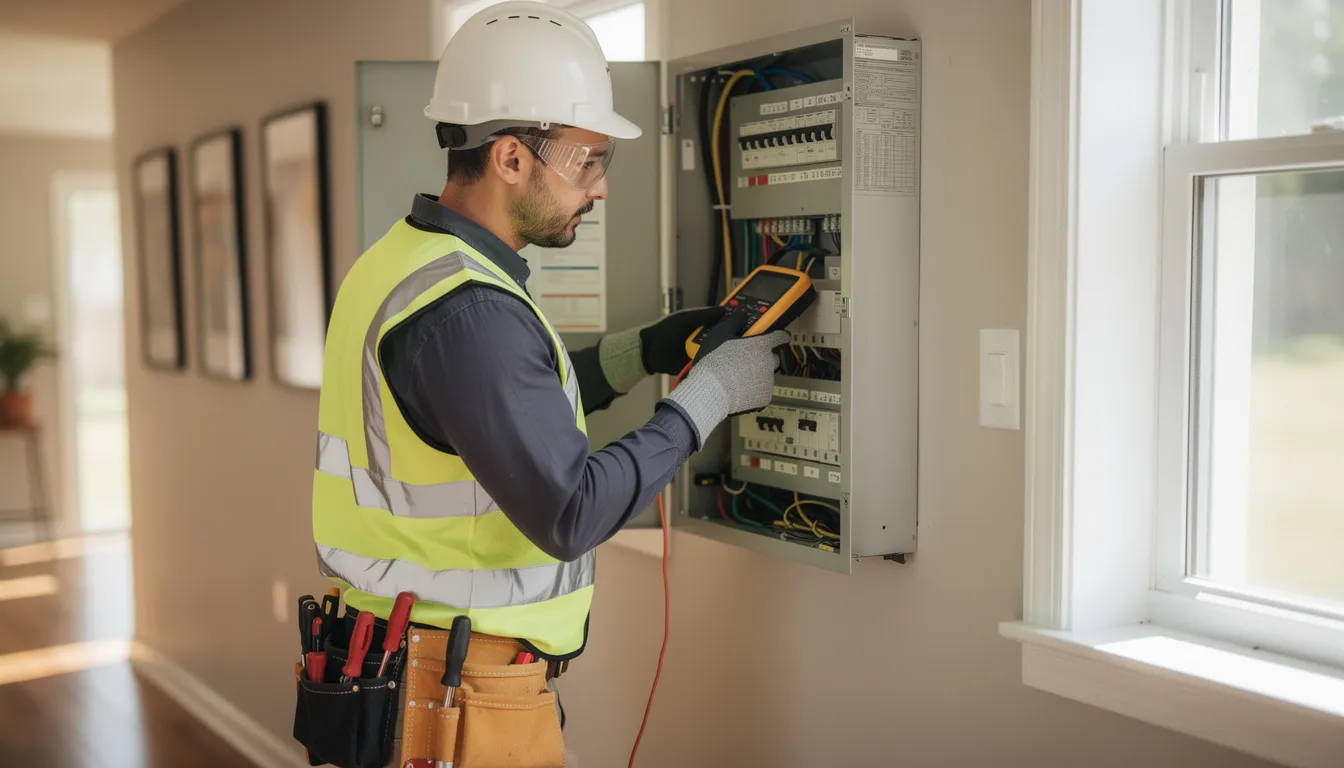
Look for a licensed electrical contractor in Orange County with a portfolio of device setups, not simply tenant improvements. Ask about readily available fault existing computations, selective coordination, and NFPA 70E practices. A good business electrician in Orange County will have stories that consist of both successes and repairs. References from stores that run devices similar to yours matter more than glossy leaflets that claim best electrical expert in Orange County. Proximity helps too. When you are searching electrician near me Orange County, prioritize reaction time and familiarity with your city's inspectors over generic accolades.
If you need fast help, a same day electrician in Orange County can frequently pull a permit, rough in a run, and prep for assessment within 24 to two days for straightforward circuits. For bigger scopes, anticipate a short style phase, authorization, rough-in, OEM coordination, and after that a clean handoff with documentation that matches the work.
A quick anecdote from the field
A shop in Costa Mesa added a second CNC and a dust collector, all on the fly while going after a big order. The first installer tapped the existing 208 V panel with a new 100 amp breaker, ran 150 feet of 1 inch emergency medical technician, and called it excellent. The machines ran, mostly. Operators saw random VFD faults, the dust collector tripped when a week, and the inspector requested SCCR documentation that did not exist. We were asked to fix it without adding downtime.
We measured harmonics, discovered an upstream 10 kAIC panel with 18 kA readily available fault current, and noted 5 percent voltage drop at the CNC under load. The option was not unique. We installed a new 225 amp panel with 22 kA rating fed from an effectively sized breaker, upsized the CNC feeders to 3 AWG copper to cut voltage drop listed below 3 percent, included line reactors to both VFD drives, and offered a clear one-line with labels. The inspector approved the first go to. The VFD faults vanished. The dust collector has actually not tripped since. The owner informed me the best part was not the devices, it was the documentation taped inside the panel door that their maintenance tech now uses.
The bottom line for Orange County shops
Machine circuit installation lives at the intersection of code, utility truths, and how your individuals in fact work. Do the mathematics, style for upkeep, and leave a paper trail. Coordinate with the OEM and the rigger, regard readily available fault existing, and place disconnects where real operators will utilize them. If you line up those pieces, your machines begin clean, pass evaluation smoothly, and make parts instead of excuses.
If your shop is planning a move, an expansion, or a single brand-new arrival that takes place to draw 80 amps at 480 V, generate an Orange County electrician who has done this dance before. The right partner, whether you call them an industrial electrician in Orange County or simply your go-to local electrical expert in Orange County, will leave you with circuits that remain quiet, panels that welcome the next device, and a crew that sleeps at night since the lights stay on.